
Often in clinical practice we hear form patients that they have got a slip disc! This blog is an attempt to address the argument that discs can’t slip, and they don’t slip.
Let’s first understand what a disc is.
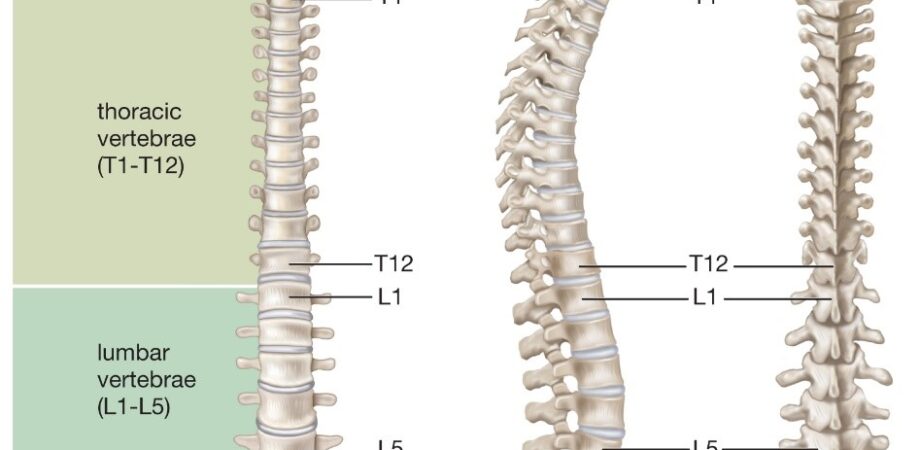
Human spine is divided into 5 different segment: cervical, thoracic, lumbar, sacral and coccyx. These different segments are made up of bones which are called as vertebrae. Each segment has different number of bones with cervical having five, thoracic having twelve, lumbar five, sacral five and coccyx five.

Every segment in your spine has a disc except for the C1-C2 level and the level between the bottom of your skull and the top vertebrae (C0-C1). Discs are present between the vertebrae and allows for the intervertebral movements and can sustain high compressive loads. It’s fibrocartilaginous consisting of a central gelatinous core; the nucleus pulposus encircled by concentric layers of a densely fibrous connective tissue, the annulus fibrosus.

Discs don’t slip
Discs forms a fibrocartilaginous joint between two vertebrae to allow slight movement of the vertebrae and acts as a ligament to hold the vertebrae together. This type of fibrocartilage joint can also be referred to as a symphysis. These joint are EXTREMELY STRONG!
Being extremely adhered and strong should make us understand that Human discs do not slip.
So, the next question is where does this myth comes into existence. It arises from how we visualize the discs; they really aren’t “discs”, they are nothing like a Jelly (jam) donut or a rubber washer, they do not exist in isolation and are made up of connective tissues of a predominantly cartilaginous nature.
The question then we need to answer is Can discs get injured? Sure. Can discs heal? Absolutely YES! The disc injury in medical literature is described as degeneration, prolapse, extrusion and sequestration.

The disc injury may lead to pain which is called discogenic pain. So, if you are having spinal pain, you must remember that there can be many causes of it, DISC is only one of those causes!
More Importantly you now know that DISCS DON’T SLIP!
In the subsequent blogs we will focus on neck and back pain!
Thanks for reading!
Written and compiled by Dr Ammar Suhail PT